
Part II — Angels, Pixies, and the Stories We Tell About Reality
Human beings have always tried to explain the unseen parts of reality through stories. Long before modern science existed, cultures around the world described invisible beings that interacted with the physical world.
Some traditions spoke of angels or spirits. Others imagined fairies, pixies, or other mythical creatures. These ideas were attempts to describe forces and experiences that people could not easily explain using the knowledge available at the time.
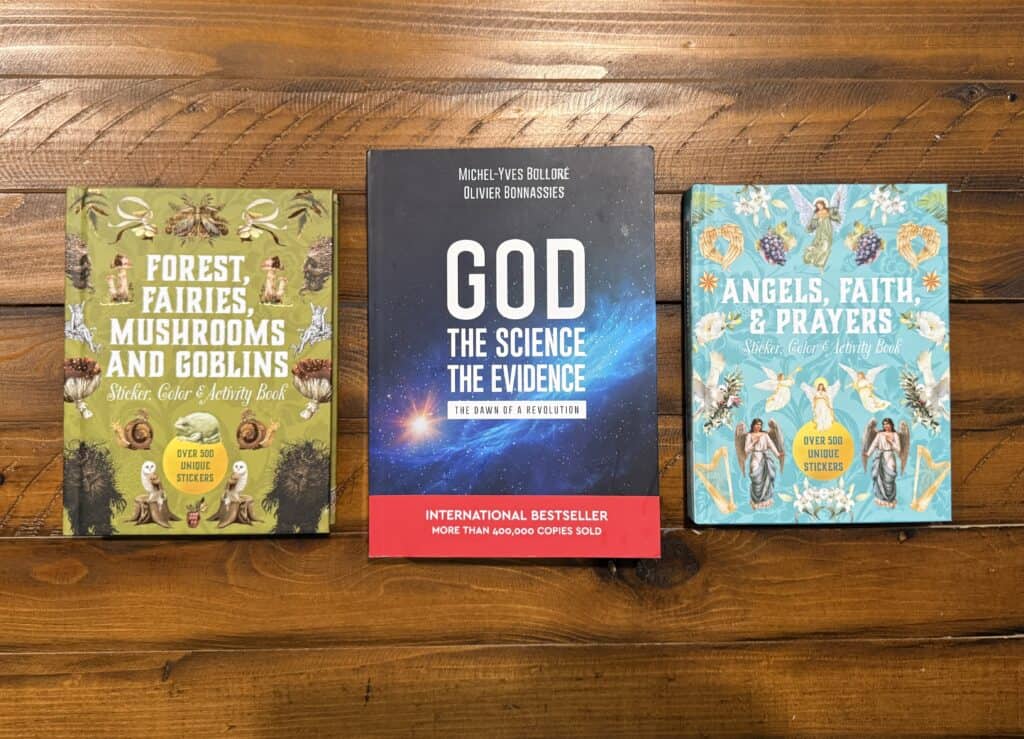
While modern science does not treat such stories as literal explanations, it is fascinating to notice how strongly people still react to the language used to describe invisible things. Consider two statements that are logically very similar. If someone says, “I believe angels exist,” most listeners react calmly. They may agree or disagree, but the statement falls within a familiar religious framework.
Now imagine someone saying, “I believe pink fairies or pixies exist.” The reaction is usually very different. People laugh, or they assume the speaker is joking. Yet from a purely logical standpoint, the two ideas describe something quite similar: unseen beings with wings interacting with the world.
The difference in reaction is not scientific; it is cultural.
This odd difference in cultural acceptance was captured beautifully by Lewis Carroll in Alice in Wonderland. When Alice finds herself in a strange world where animals talk and logic behaves unpredictably, the Cheshire Cat famously tells her, “We’re all mad here.”
Wonderland is a place where normal assumptions about reality no longer apply. Size changes unexpectedly, time behaves strangely, and the rules that Alice once took for granted suddenly dissolve. In some ways, the strange logic of Wonderland resembles the strange logic that physicists encounter when studying the quantum world.
Quantum mechanics often feels like stepping into a version of Wonderland designed by mathematicians. Particles behave like waves. Energy becomes matter. Objects can exist in multiple states until they are measured.
The deeper scientists investigate, the less the universe resembles the simple mechanical system that earlier generations imagined. Instead, reality appears fluid, probabilistic, and deeply interconnected. What once seemed absurd gradually becomes accepted as new evidence accumulates.
Ironically, modern science already asks us to accept many invisible phenomena. We believe in bacteria even though we cannot see them without microscopes. We believe in radio waves even though we cannot feel them directly. We believe in atoms, electrons, and quarks because experiments consistently reveal their effects.
Most people have never personally observed a quark, yet we accept their existence because the scientific method has repeatedly confirmed predictions based on their behavior. Science therefore relies not on blind belief but on evidence that can be tested and reproduced.
Even so, science itself requires a certain amount of trust. We trust that instruments are functioning correctly. We trust that experiments are performed honestly and carefully. We trust that the mathematical models describing physical processes correspond to the underlying reality.
This trust is different from faith in mythology because it is constantly evaluated and revised. Scientific ideas must survive repeated testing, and when they fail to do so, they are replaced by better explanations.
Throughout history, humans have often debated the nature of things they cannot see. Medieval theologians famously argued about questions such as how many angels could fit on the head of a pin.
These debates may seem amusing today, yet they reveal something important about human nature. When confronted with mystery, we instinctively begin constructing explanations. Sometimes those explanations take the form of religion or philosophy. Other times they take the form of scientific theories. In every case, we are attempting to organize the unknown into patterns that make sense to us.
Modern physics has added a surprising twist to this long tradition. Instead of removing mystery from the universe, scientific progress has often revealed deeper layers of it. Physicists now know that most of the universe is composed of substances we barely understand, such as dark matter and dark energy.
These mysterious components appear to make up the majority of the cosmos, yet their true nature remains uncertain. The more we discover, the more we realize that our knowledge represents only a small piece of a much larger puzzle.
Perhaps the most valuable lesson of science is therefore not certainty but humility.
The universe is far more complex than our everyday intuitions suggest. The models we develop to describe it are powerful tools, but they are always provisional. New discoveries may refine or even overturn our current understanding. What remains constant is the spirit of curiosity that drives us to keep asking questions.
Imagination plays an essential role in this process. Many of the greatest scientific breakthroughs began as imaginative ideas that initially sounded strange or impossible. Atoms, black holes, and expanding universes were once considered speculative or even absurd. Only through careful observation and experimentation did these ideas eventually become accepted parts of science. The challenge is not to eliminate imagination but to guide it with evidence.
In that sense, the universe itself invites a kind of playful curiosity. Quantum physics reveals a reality far stranger than the mechanical clockwork once imagined by classical scientists. Matter emerges from energy. Particles appear as vibrations in fields that fill all of space. Observation influences the way certain physical processes unfold. These discoveries remind us that the world is not as straightforward as it seems from our everyday perspective.
Against this backdrop, the centuries-old arguments about invisible beings—whether angels, spirits, or fairies—begin to look less like madness and more like humanity’s early attempts to grapple with mystery.
Our ancestors lacked particle accelerators and quantum equations, so they described the unseen using the language of myth. Today we describe it using mathematics and experiments.
Both approaches arise from the same fundamental impulse: the desire to understand the hidden structure of reality.
In the end, quantum physics does not confirm the existence of angels, pixies, or any other mythical beings. But it does reveal that the universe is far stranger and more imaginative than our common sense would suggest.
Matter itself is a dynamic pattern of energy. The solid world we experience is built from vibrations in invisible fields that stretch across the cosmos. We are participants in a vast and intricate system whose full nature we are only beginning to comprehend.
Perhaps that realization should inspire a sense of wonder rather than certainty.
We live inside a universe that constantly surprises us. Every discovery opens the door to new questions. And as Alice learned when she wandered through Wonderland, curiosity is often the best guide when exploring strange territory. After all, if reality itself sometimes behaves like a cosmic puzzle, a little playful imagination may be exactly the right attitude with which to approach it.
Read more about how quantum fields in Part I.