Over the years, I’ve dealt with people who think they can corral creative entrepreneurs with contracts, bylaws, and legal maneuvering — as if creative energy responds to paperwork.
These folks believe value comes from controlling entities, not from the raw, unpredictable brilliance that built the thing in the first place.
In the world of entrepreneurship, my favorite example is Steve Jobs.
For those who don’t know the story: Steve was fired from Apple — the company he founded.
The suits thought they’d won. Steve was out. They were in control.
While they were busy managing Apple into irrelevance, Steve was in exile building billion-dollar companies.
In 1985, he paid 5 million for a stake in Pixar – went on to became CEO and in 2006 – sold it to Disney for $7.4 billion in an all stock deal making him Disney’s largest shareholder at that time. He also launched NeXT, which eventually became the foundation for modern Apple software.
Meanwhile, Apple was tanking. Then Steve came back.
He gave us the iMac. The iPod. The iPhone. The iPad. He didn’t just revive Apple; he redefined technology and changed how we live.
Today, Apple is a $2 trillion company — because of what Steve built, not what anyone managed.
Now let me break this down with a metaphor.
I like metaphors that use animals. Simple. Visceral. Gets the point across.
Cows are easy to fence in. A couple of wires and some posts, and for the most part, they’ll stay put.
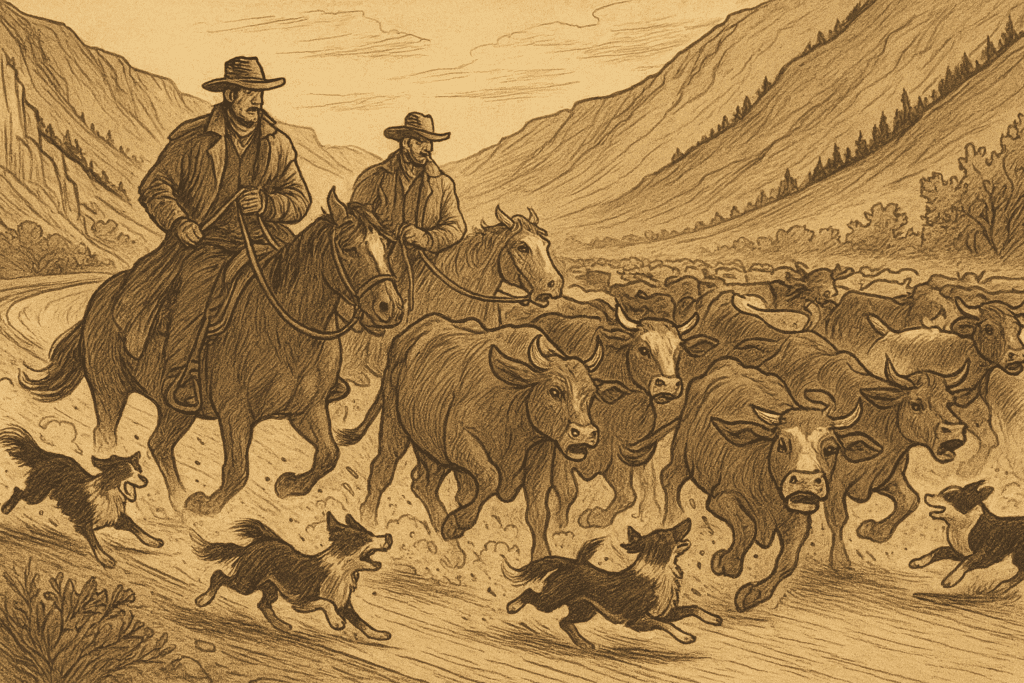
You can herd them with horses, four wheelers and dogs less than a tenth their size. They’re cooperative. They’re domesticated.
Most people are like cows.
That’s not an insult. We need cows. Cows keep the Fortune 500 companies running. They follow structure. They stay in their lanes. Society wouldn’t work without them.
But creatives? Founders? Visionaries?
They’re not cows.
A few weeks ago, Wild_Woman_MT and I were driving through Bridger Canyon and saw a pair of old-school cowboys moving a herd of free-range cattle. Not four-wheelers — horses. And not feedlot cattle — these were the rowdy kind. Mooing, kicking, smashing into each other. Still cows, but not used to fences. Not used to being told what to do.
But even they don’t compare to the antelope and elk.
In Montana and Wyoming, antelope run free. They show up in the middle of farmers’ fields, munching on crops they love.
Try to stop them with cow fencing? Good luck. They leap it without slowing down.
Elk? Same deal. One night you’ve got a clear field, the next morning 2,000 elk are standing in it like they own the place — and a few days later, gone again.
Kerry’s dad — my father-in-law — came to visit us during our first year of marriage in Jackson Hole. He loved the elk. So much, in fact, that when he got back to Maine, he decided to raise elk himself.
And he did manage to fence them in — but only with fencing way taller and stronger than anything used for cows.
Cow fencing was a joke to them. These were wild creatures. Containing them took serious work.
THE TAKEAWAY
A lot of people who get involved with entrepreneurs — especially founders — think they can hem them in with legal structures. They think they can “win” by out-lawyering the creative force that built the thing.
But often, when they do wrest control, what they’re left with is just the shell. The structure. The cow fencing. No spark.
That’s what happened to Apple. Right before Steve came back, it was heading off a cliff. Ask yourself: What has Apple released since Steve passed that’s truly revolutionary? Not upgrades. Not better cameras. I mean game-changers.
Steve was the wild thing.
He wasn’t perfect. But he couldn’t be fenced in — and the world he imagined is the one we live in now.
If you’re dealing with someone like that — a builder, a creative, a founder — maybe don’t start by looking for the legal fence. Start by asking where they’re coming from.
Because if you try to fence in a wild thing, don’t be surprised when the magic disappears with them.