A lot of people confuse creativity with creative process. They think being good at executing ideas—designing, coding, drawing—makes someone “creative,” and that those who can’t do those things aren’t.
That’s a narrow and misleading view. Let’s break this down.
One of the most famous entrepreneurs of our time, Steve Jobs, is often criticized for not being a “creative.” But that criticism usually comes from people who don’t understand the difference between being a creative and mastering the creative process.
Steve was notoriously difficult to work with. He was intense, demanding, even volatile. When he had a vision, he wanted it executed exactly as he imagined. Many people couldn’t handle working with him. One person who could was Jony Ive, Apple’s legendary head of industrial design.
Jony was creative too—no question. But his strength was in process. He had a deep understanding of form, craft, and execution. He could take a concept and refine it, shape it, make it real.
But Steve was the big-picture guy. He didn’t just improve things—he imagined what didn’t yet exist and pulled others into that vision.
People close to him have said Steve had the ability to “bend reality.” What they meant is this: he could hold a vision so clearly and with so much conviction that others would start to believe it too. That’s not process. That’s raw creativity.
Too often, we think of creativity in terms of skills—like the ability to draw. I can’t draw. I’ve tried. Some people are just naturally great at it, and they get labeled as “creative.” Meanwhile, people who can’t render images get labeled as “not creative.” That’s putting creativity into a very small box.
Creativity crosses disciplines. I couldn’t list them all if I tried. Some of the most visionary people can’t draw, code, or design. Steve Jobs could do all of those things to a degree, but he wasn’t elite in any of them.
What set him apart was his ability to imagine, to inspire, and to see what wasn’t there yet—and then drive it into existence through others who had the technical chops.
Here’s the distinction:
- Creativity is the ability to generate original ideas, hold a vision, and imagine something that doesn’t yet exist.
- Creative process is the skill, discipline, and structure required to bring that vision to life.
In creative entrepreneurialism, you need both. But if you’re not strong on the process side—if you can’t design, code, or draw—that shouldn’t stop you.
Today, with the rise of software, the internet, and now AI, the tools of execution are more accessible than ever.
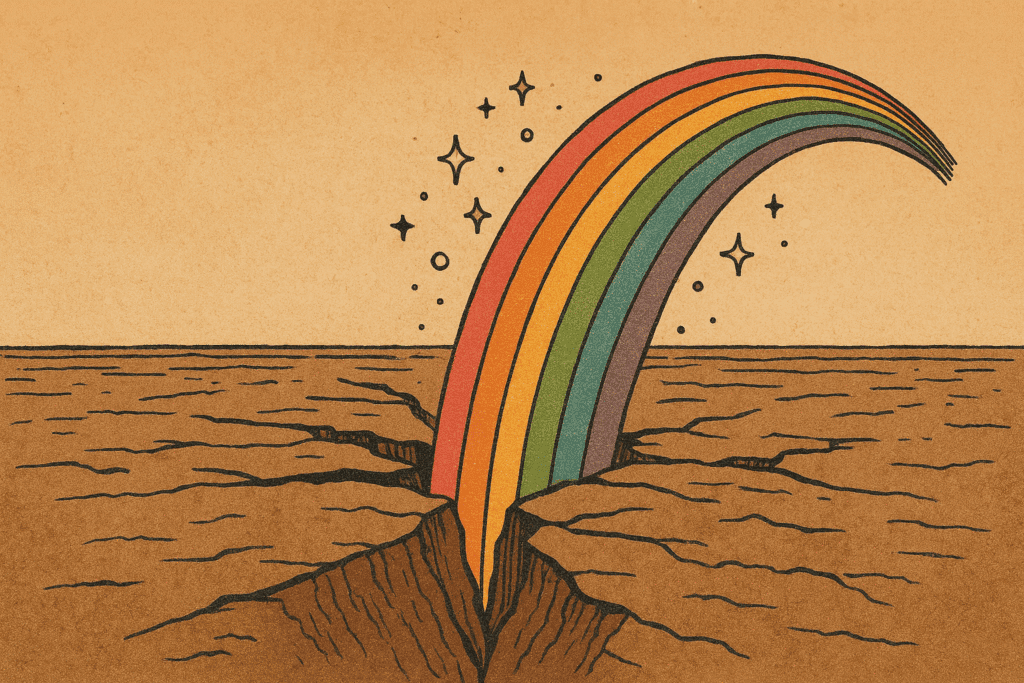
The playing field is flattening. And those who’ve had vision but lacked the means to execute it? They’re about to unleash a whole new wave of innovation.
If you’re paying attention, you can already feel the ground shaking.