If you’ve ever sat through a 401(k) enrollment meeting, you’ve probably heard about dollar-cost averaging. If you already understand the concept, you can stop here — unless you want to see how it works in reverse once you retire and begin withdrawing from your accounts.
The Power of Dollar-Cost Averaging
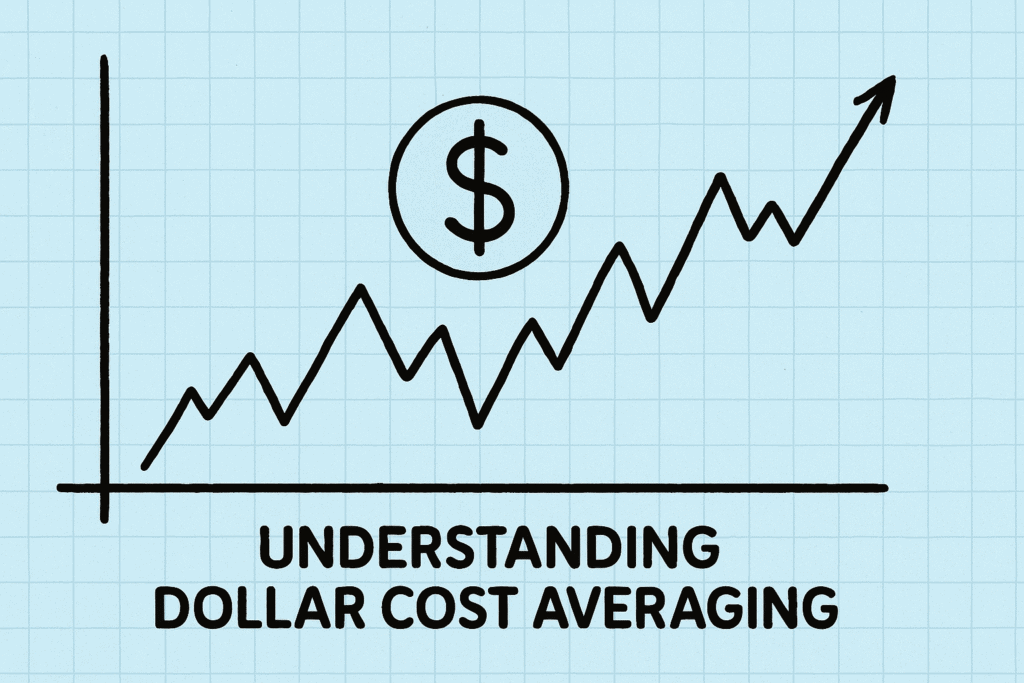
We all know the stock market moves up and down, and we never know whether we’re buying at a low or high price. That’s where the power of dollar-cost averaging really shows up.
When you contribute regularly to your 401(k) — or any investment account — you’re buying at all kinds of prices: some low, some high, and many in between. Over time, these purchases average out, giving you an average cost per share that’s never the highest and never the lowest.
During Accumulation: Volatility Is Your Friend
When you’re in the accumulation phase (your working and saving years), the market’s ups and downs — also known as volatility — can potentially work in your favor.
Sometimes, you get to buy more shares when prices are down. Those extra shares can compound your long-term growth.
So during your saving years, volatility may be your friend. It can reward your discipline and consistency.
In Retirement: The Script Flips
Now let’s look at the same concept in reverse — during retirement.
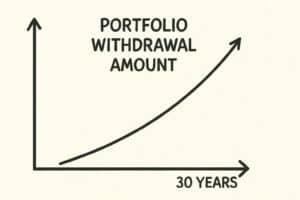
Suppose you’ve saved $1,000,000 and are withdrawing $45,000 per year — a 4.5% withdrawal rate, or $3,750 per month.
Now imagine the market drops by 30%. Suddenly, your portfolio is worth $700,000, but you’re still taking out $45,000 per year. Your new withdrawal rate jumps to 6.43% — a level that may be hard to sustain, especially for younger retirees.
Even if the market recovers in 18 to 24 months, that short-term drawdown can create lasting damage.
Why? Because you’re selling more shares at lower prices to fund income. Instead of buying low, you’re selling low — the opposite of dollar-cost averaging.
This is what financial planners call sequence-of-returns risk — the risk that a market downturn early in retirement can permanently reduce how long your money lasts.
The Solution: Asset Allocation
So how do you protect yourself?
Asset allocation — the mix of stocks, bonds, and cash in your portfolio — is the key.
Having the right balance gives you flexibility to draw from more stable investments during downturns, letting your stock positions recover over time.
I wrote more about asset allocation – how to allocation between stocks and bonds here.
In Summary
- Volatility is your friend when you’re saving and investing.
- Volatility is your enemy when you’re withdrawing and relying on your portfolio for income.
Understanding the difference — and preparing for it — can make all the difference in your retirement security.