I’ve written about creative flow before, but it never hurts to find a new angle—especially for people just stepping onto the creative path.
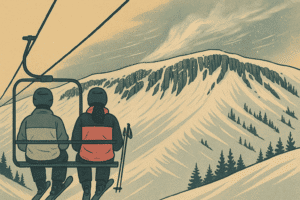
Here’s the truth: learning from an expert can actually be harder than learning from someone just a few steps ahead of you. The Olympic-level skier might blast past you in a blur, but the intermediate skier—just slightly better than you—can explain what they’re doing in a way that makes sense. They still remember the climb behind them. They haven’t forgotten the mountain.
Most experts forget how they learned what they know. A few don’t. Those rare few become great teachers. But for the rest of us, we learn by remembering the step right behind us—and passing that torch forward.
So let’s talk about creative flow.
I keep it simple. Bite-sized. One piece at a time—like the old “How do you eat an elephant?” joke.
There are two major types of creative flow:
FLOW STATE ONE: THE IDEA DUMP
This is pure surge.
No filter.
No rules.
Just output.
This morning alone, I’ve written three rough drafts. One is already live. Two are waiting their turn. The ideas keep coming, so I let them. I’m filling the “idea can.”
When you’re in this mode, do not stop to edit. Don’t adjust titles, spelling, grammar, layout—nothing. Editing is a brake pedal. Flow is a gas pedal. Don’t mix them.
Just go.
FLOW STATE TWO: THE TECHNICAL EDIT
Once the wave slows down, then I shift gears.
This is cleanup mode:
– tighten the writing
– fix the spelling
– format the paragraphs
– drop the links
– tune the flow
This part doesn’t need inspiration.
It needs focus.
It’s mechanical, not mystical.
There’s a quote I love:
“Alcohol for inspiration, coffee for execution.”
You don’t need either to understand the point. Inspiration loosens the mind. Execution sharpens it. For you, inspiration might be a walk in the woods. Execution might be a playlist or a run. The key is knowing what sparks each phase—and honoring it.
THE TAKEAWAY
Know what state you’re in.
And don’t fight it.
Ride the wave when it’s rising.
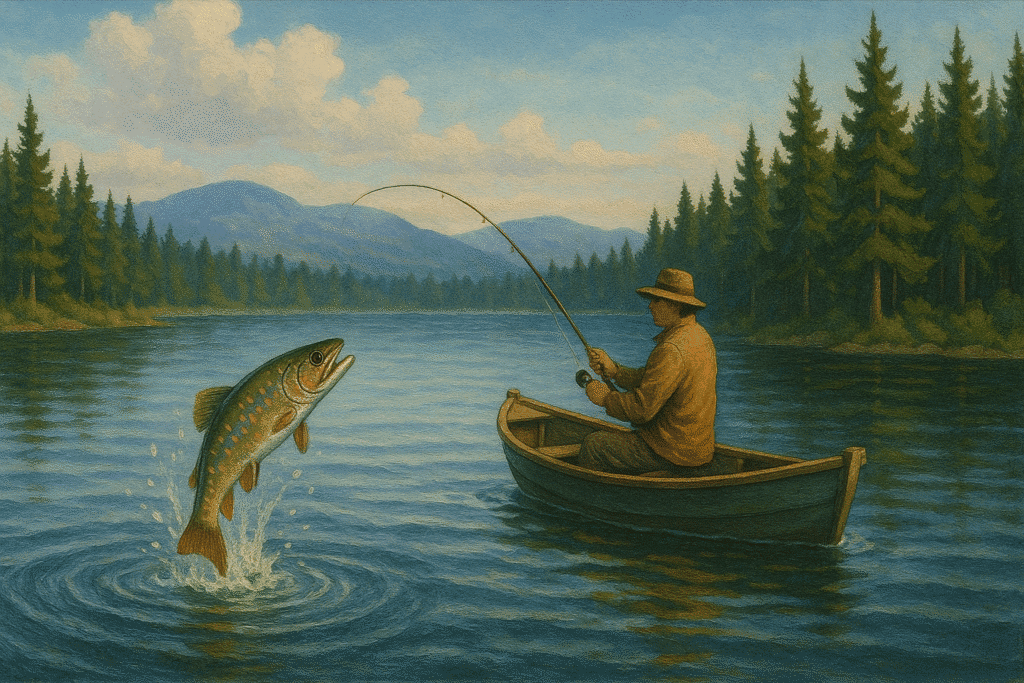
Clean the fish later.
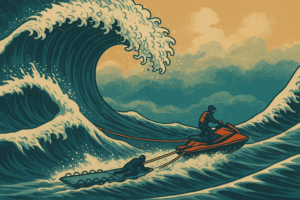
If you surf in Maine, you already know: sometimes the ocean is dead flat and you’re just sitting on your board. Other days, every single wave is surfable. Same with fishing—some days you can’t buy a bite; other days, you’re pulling them in back-to-back.
On the high-output days, you don’t stop to clean the fish.
You keep casting.
Create when it’s flowing.
Edit when it’s not.
That’s the whole game.