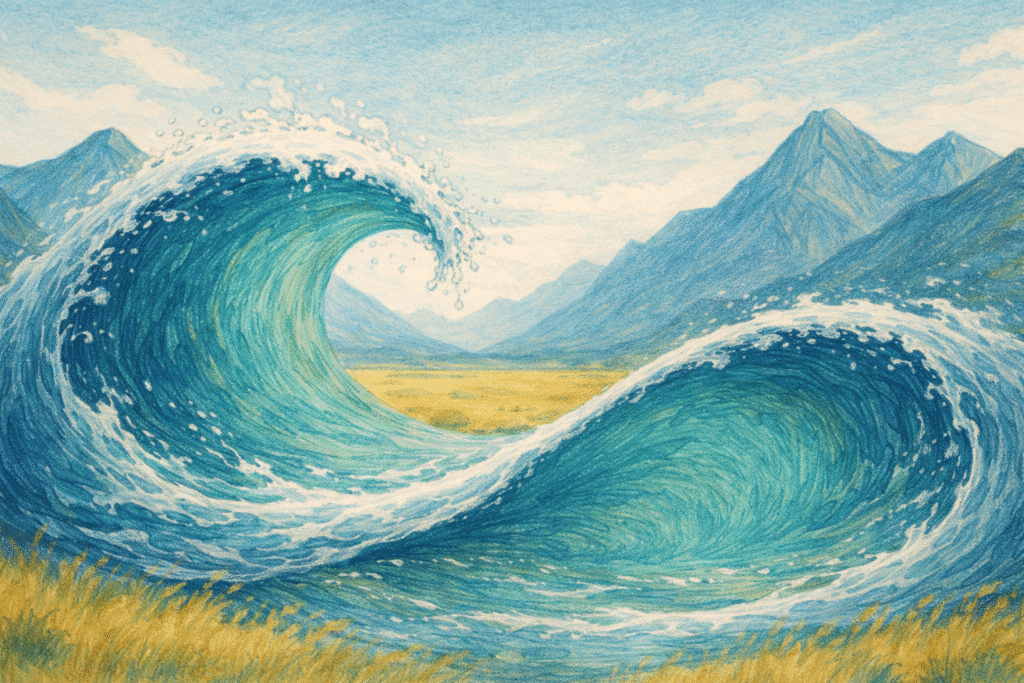
Ridge, Valleys, Peaks & Troughs
I’ve written about this before, but sometimes it helps to walk back through familiar ground. Not because we missed it the first time—but because I understand it a little differently now.
I talk with a lot of entrepreneurs. I hear the same thing from musicians and writers too:
“Sometimes I feel incredibly creative. And then it disappears. For days. Weeks. Sometimes longer.”
That experience is more normal than most people think.
Everything I write comes from my own lens. In creative work, a lens matters. If the way I describe this fits your experience, keep it. If it doesn’t, feel free to leave it behind.
Here’s the frame that’s helped me most.
There are two distinct phases in creative life:
Creativity
Creative Process
They are related—but they are not the same thing.
Phase One: Creativity
This is what most people mean when they talk about flow.
Ideas arrive quickly. Sometimes faster than you can keep up with. Connections feel obvious. Energy is high.
Everything feels possible when you’re in this phase, do not try to build anything.
Don’t develop the story.
Don’t refine the song.
Don’t outline the business.
Don’t judge the idea.
Just capture it.
Get the idea out of your head and into some form you can recognize later: a note, a voice memo, a sketch, a line or two. I think of this as the “catch and capture” phase.
Nothing more.
I sometimes call it the idea can. You’re not sorting yet—you’re collecting.
This matters because creativity comes in waves. All humans experience mood cycles. Some of us feel them more strongly than others. I do. Over time, I’ve learned to ride them rather than fight them.
The key point is this:
Creativity is not the time to evaluate ideas.
When you’re in flow, almost everything feels brilliant. That doesn’t mean it is.
Phase Two: Creative Process
This phase often arrives when energy is lower. Quieter. Less exciting.
This is where most people assume creativity has “left.”
It hasn’t.
This is the phase where you test, refine, edit, and build. You look back at what you captured earlier and ask simple questions:
Does this still matter?
Does it still hold weight?
Does it have momentum?
If an idea looks bad when you’re low, don’t throw it away. Just move it down the list. The ideas that still feel interesting—or at least workable—during lower energy moments are often the ones worth pursuing.
Why?
Because they have momentum and momentum doesn’t require inspiration. It requires discipline, desire, focus, and patience.
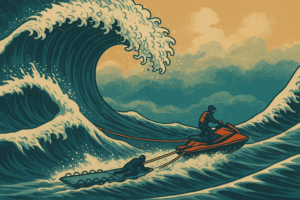
Think of it like a wave.
The crest is creativity.
The trough is process.
Both are necessary.
Riding Your Own Waves
There isn’t a universal rhythm. There’s only yours.
Some people try to force creativity during the process phase. Others wait endlessly for inspiration before they begin. Both approaches tend to fail.
Learning when to collect—and when to build—is a skill. It takes time. Trial. A little self-forgiveness.
Keep going.
Keep adjusting.
Keep riding.
And don’t mistake temporary lows for permanent failure. Setbacks and disappointments are part of the terrain. They test us—but they don’t define us unless we let them.
Nothing here is about perfection.
It’s about staying in motion, in emotion & ‘in the flow 🌊’..