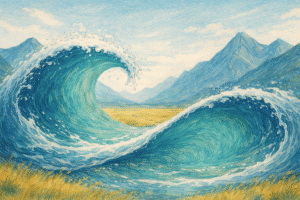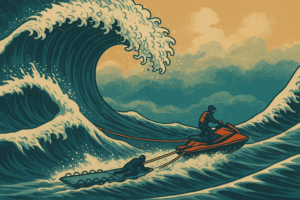
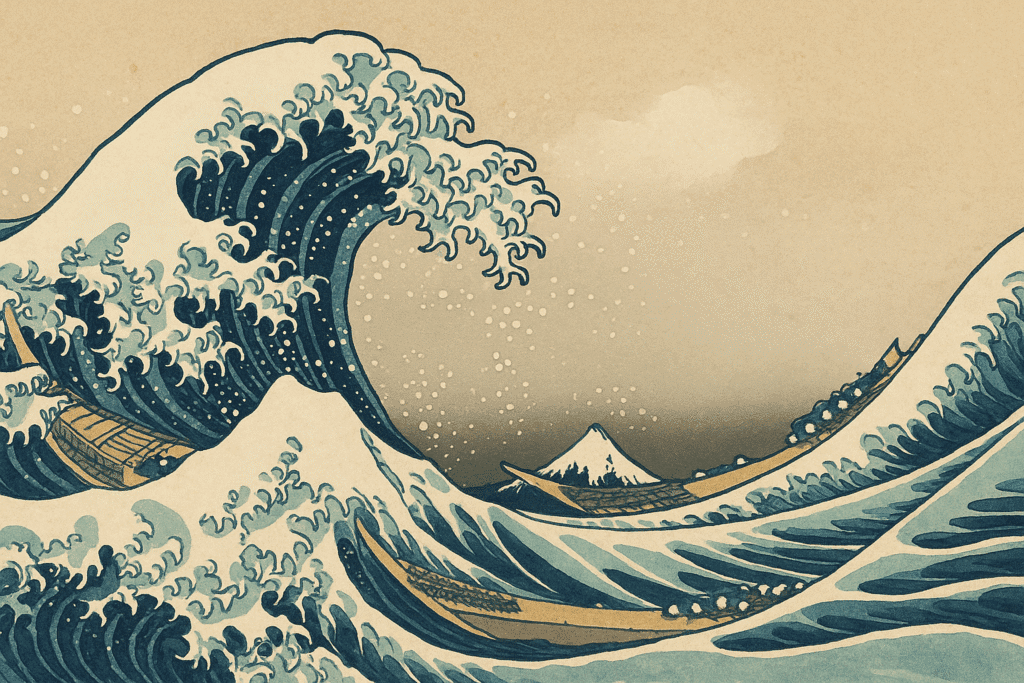
As creatives, our energy isn’t constant. Some days the ideas pour out effortlessly. Other times, you’re staring at the screen wondering if you’ve forgotten how to write, design, or make anything at all. That’s normal. The trick isn’t to fight the wave—it’s to learn how to surf it.
But before you can ride your creative wave, you have to recognize what your waves are.
For me, creativity strikes early in the morning. And I mean early. Sometimes it’s 4:30 a.m. and I’m wide awake with a dozen ideas bouncing around in my head. I call this Creative Energy Wake-Up Syndrome — when your brain flips on the light switch before the sun does. If you’ve experienced it, you know what I mean. You’re awake, fully alert, and ready to build something from nothing.
Instead of resisting it, I’ve learned to work with it. I don’t fight the early wake-ups anymore. I keep a notebook by the bed, sometimes my laptop. I jot things down. I sketch outlines. I draft blog posts like this one. I’ve stopped seeing it as a disruption and started treating it like a gift—because it is.
But what about the flipside?
Sometimes I wake up and nothing’s there. No spark. No drive. No new ideas. Just static. And that’s okay, too.
Over the years, I’ve built a system around this. When I’m creatively flat, I don’t force it. Instead, I shift into the more technical or strategic parts of my work—the tasks that require focus but not inspiration. Things like:
- Updating or optimizing my WordPress site (I use Hostinger, which makes this a lot smoother).
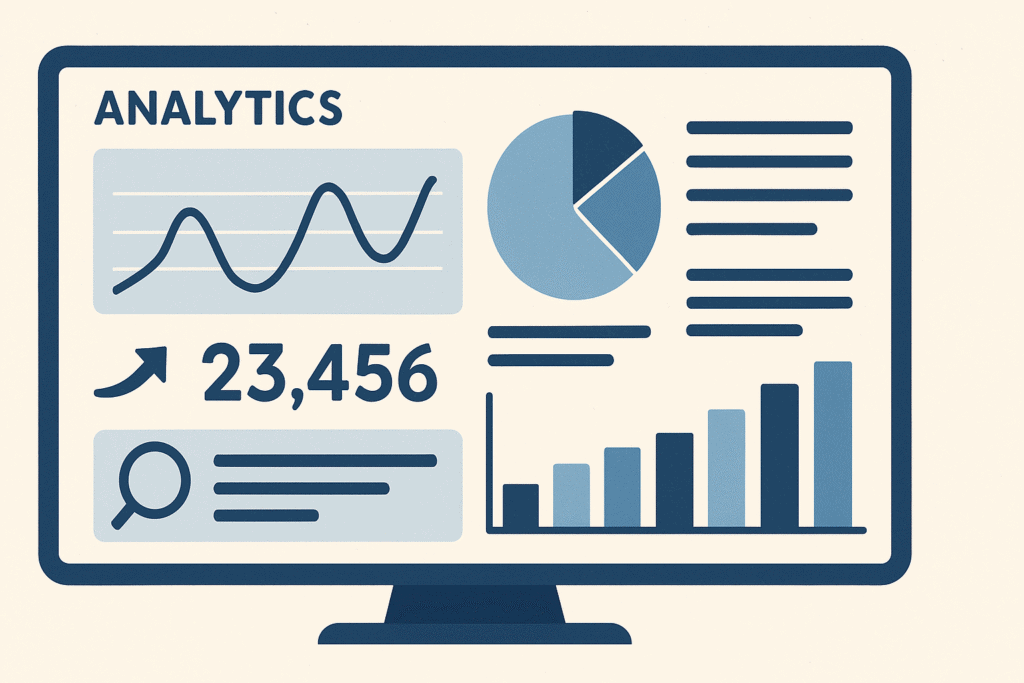
- Digging into analytics.
- Running audits and tweaking SEO.
- Building custom audiences and updating tracking pixels.
- Managing finances and planning content calendars.
- Developing backlinks and improving internal link structures.
These aren’t glamorous tasks, but they’re essential. And importantly, they don’t require me to be in a creative zone. They just require discipline and a plan.
By understanding when I’m at my creative best—and when I’m not—I can keep momentum going without burning out. I let the creative wave lift me when it comes. And when it doesn’t, I paddle through the technical waters until it returns.
That’s what creative sustainability looks like: not forcing it, but always moving forward.