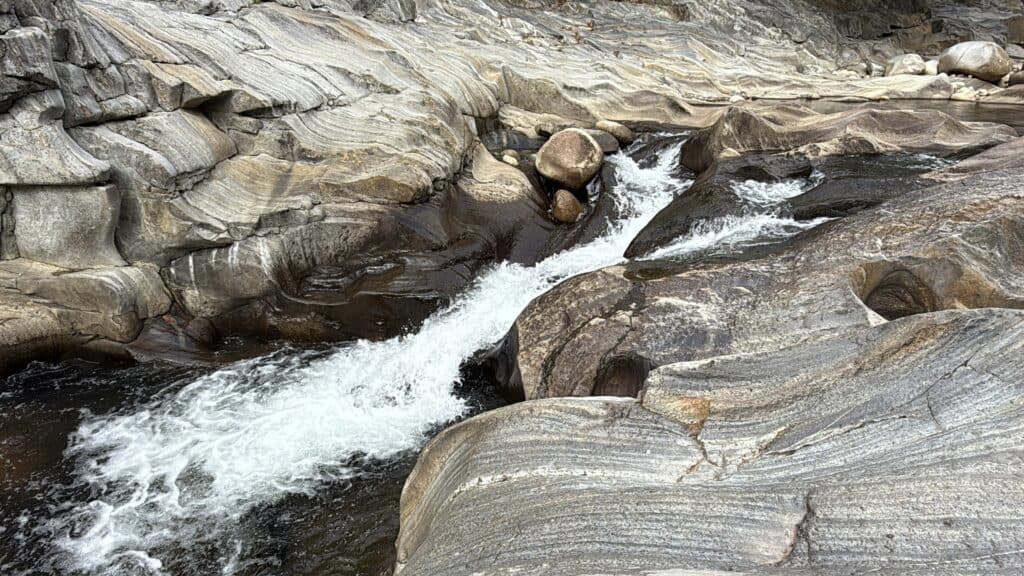
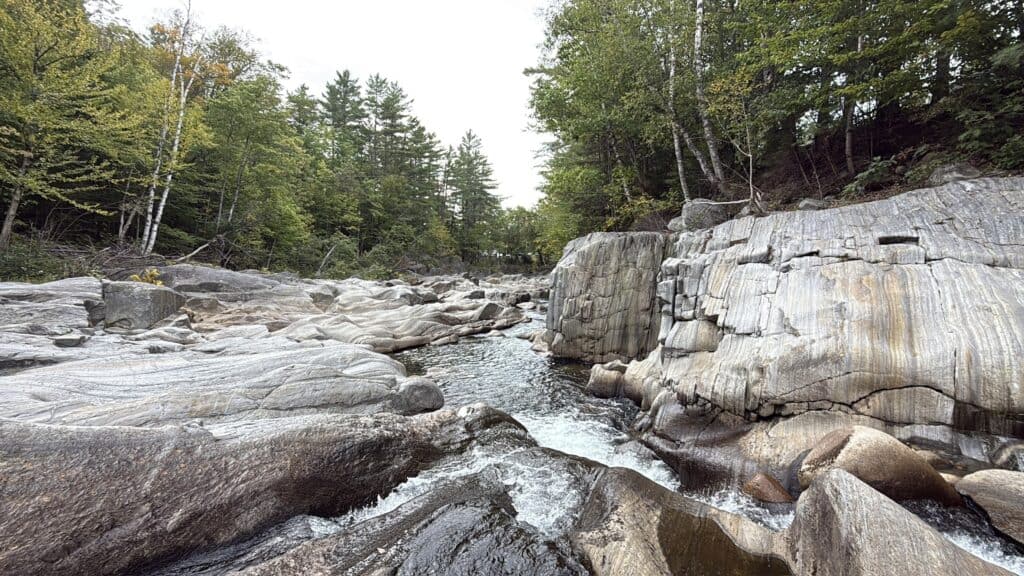
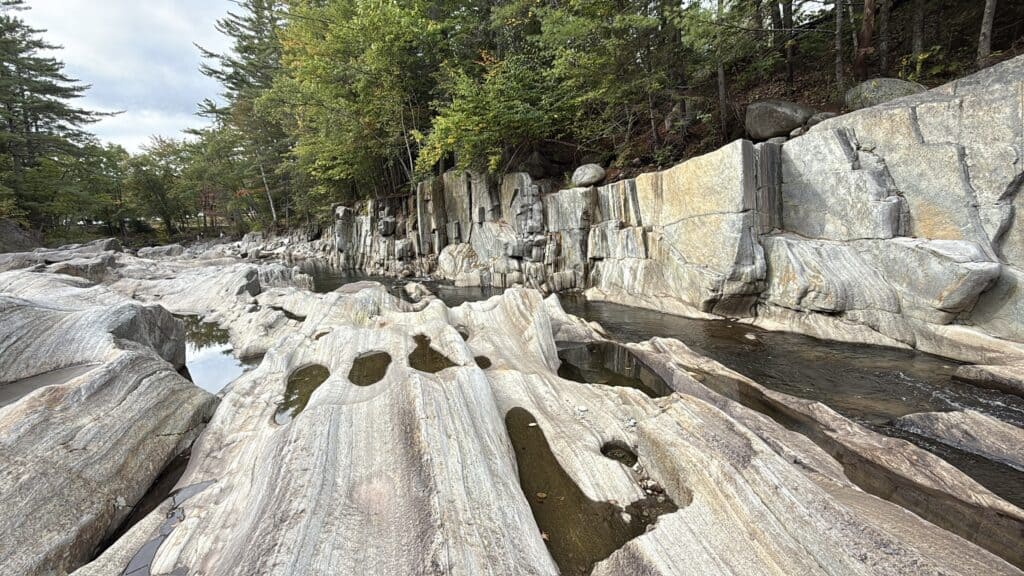
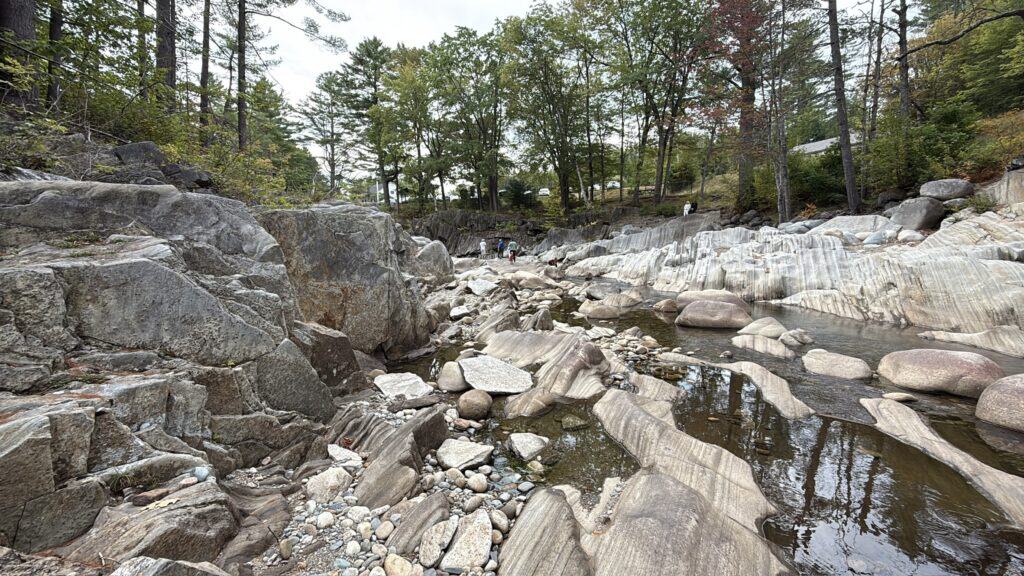
Tucked into the western mountains of Maine, right off Route 17 in the small town of Byron, you’ll find Coos Canyon — a rugged, glacially-carved slice of wilderness that feels surprisingly raw for being so easy to access. It’s one of Maine’s lesser-known natural landmarks, yet for those who stop and pay attention, it offers something rare: a shift in perspective.
A canyon, in simple terms, is a deep, narrow valley with steep sides, usually carved by a river over thousands or millions of years. Most people picture the vast canyons of the West — think Montana’s sheer-walled, sprawling river canyons where the land yawns open for miles. Maine’s canyons are tighter, more intimate. Coos Canyon doesn’t boast dramatic scale, but it punches above its weight with raw rock, rushing water, and pockets of stillness that feel far removed from the nearby road.
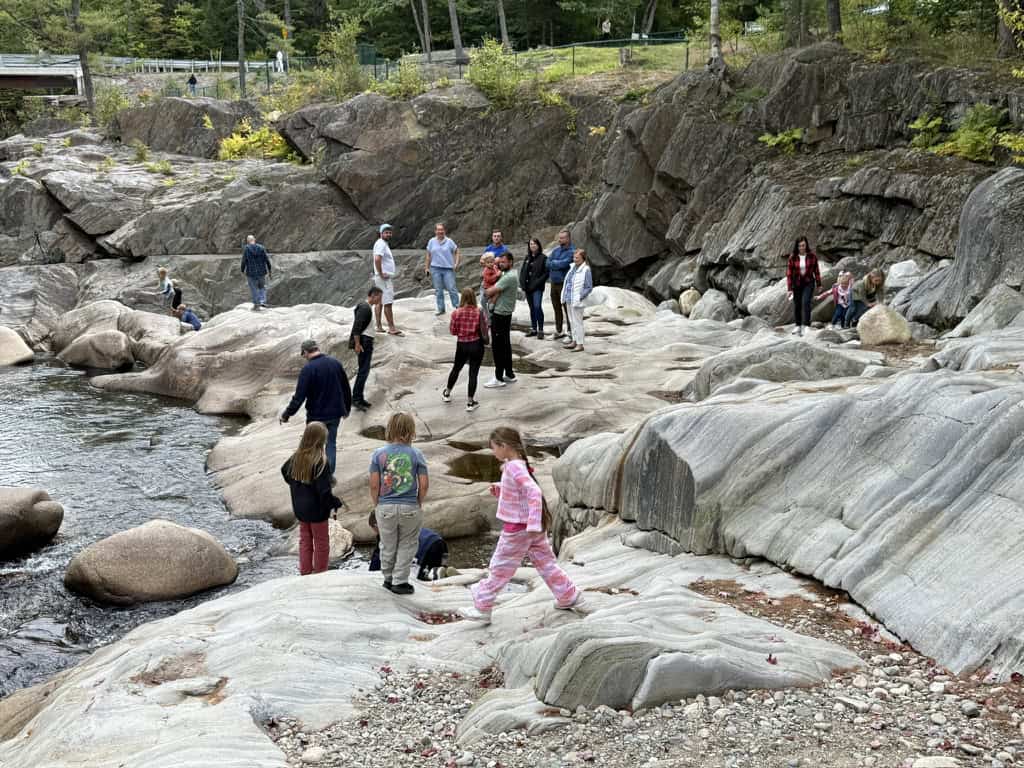
When I first pulled into the small parking area at Coos Canyon, I was greeted by a familiar scene — people lounging on the rocks, kids splashing in the pools, the hum of summer chatter floating above the river’s voice. The view from there is good. Pretty, even. But it’s the same view everyone sees.