It’s November 8, and we’re headed back down to Yellowstone… again.
Why? Because it’s one of the most beautiful places on earth—and it’s never the same twice.
People often say to me, “Oh, I’ve been there,” as if Yellowstone is just another bucket list stop. Like it’s something you check off once and move on. That’s like saying, “Oh, I’ve seen a sunset.” Sure, but every sunset is different. Same with Yellowstone. It’s alive. It changes. And no two visits are ever the same.
For those who don’t know, the Greater Yellowstone Ecosystem is massive. The national park is just the core of it. There are five entrances into Yellowstone, and they’re spread across hundreds of miles—each one with its own vibe and landscape.
Here they are, from most to least visited (roughly):
- West Entrance (West Yellowstone)
- South Entrance
- North Entrance (Gardiner)
- Northeast Entrance
- East Entrance
There are three entrances in Montana and two in Wyoming.
Fun fact: Montana has more entrances but the vast majority of the park is in Wyoming. I’m pretty sure Montana captures more tourist dollars than Wyoming. Maybe – If you’ve been to Jackson Hole and paid the prices… Yikes!
Travel Tip: If you want to see the park for less: 👉 BZN → North Entrance.
If you’re a national park enthusiast, it’s worth trying to visit all five. But if you’re flying into Bozeman Yellowstone International Airport (BZN), here are the two most relevant routes.
Route #1: Through Big Sky to West Yellowstone
This is the most common path for visitors flying into Bozeman. Why? Because West Yellowstone is the fastest way to get to Old Faithful—and Old Faithful is Yellowstone’s most famous feature.
Warning: In summer, this route is busy. Really busy. But it’s gorgeous.
You start in Bozeman—a small city with a lot of heart. Main Street is lined with independent boutiques, craft coffee shops, local brewers, and friendly folks. It’s got that laid-back Montana energy. One of my favorite signs in nearby Wilsall says it best:
“Be nice or leave.”
Montana’s full of that kind of value signaling—hats, bumper stickers, wall signs. It’s part joke, part truth.
From Bozeman, head south through Gallatin Gateway and into the stunning Gallatin Canyon. You’ll pass Big Sky—home to one of the most legendary ski resorts in North America. The terrain is serious. Experts love it, but there’s plenty for intermediates too.
Pro tip: Big Sky is more than a resort. There’s also a separate town, and it’s worth a visit. Think charming mountain village, twinkle lights over Main Street, and 20 feet of that famous Montana “cold smoke” snow in winter. If you’re staying at the resort, take a quick Uber into town one evening. Just do it for the selfie under the lights. Trust me.
From there, the road continues through Gallatin Canyon until you exit, take a left and eventually reach West Yellowstone. It’s a busy little gateway town with plenty of hotels, diners, and tourist shops catering to the millions who enter here each year.
Route #2: Through Livingston to the North Entrance
This is our preferred route. It’s slightly shorter from Bozeman, a lot less crowded, and the scenery is unreal.
Head east on I-90 out of Bozeman. Within minutes, you’ll hit Bridger Pass—named after mountain man Jim Bridger. The Bridger Range is what I see from my home office window, and it’s also where I ski (shoutout to Bridger Bowl).
Once over the pass, look to your right for the jagged, wild peaks of the Absaroka Range. Behind you to the north, the Crazy Mountains cut a surreal silhouette.
Next stop: Livingston. It’s just 23 miles from Bozeman and has a retro, artsy feel with neon signs and a great downtown. Yellowstone fans might remember it as the town where Kayce had his cattle commissioner office. The show wasn’t filmed here much, but it was set here.
Quick detour tip: Stop by Livingston High School. The view of the Absarokas from the football field fence? Unreal.
From Livingston, head south into Paradise Valley. For 30–40 minutes, you’ll have the Absarokas on your windshield and the gas pedal set to 80 mph. One of my favorite drives in Montana.
About 15 minutes in, you’ll hit Emigrant. If you’re hungry, grab a pecan roll at Wildflour Bakery or hit up Follow Yer’ Nose BBQ. There’s also the iconic Old Saloon if you want a cold one with a side of character.
Soon you’ll reach Yankee Jim Canyon—a dramatic stretch with steep cliffs and winding roads. Then it’s just 10 more minutes to Gardiner, the gateway town at the North Entrance.
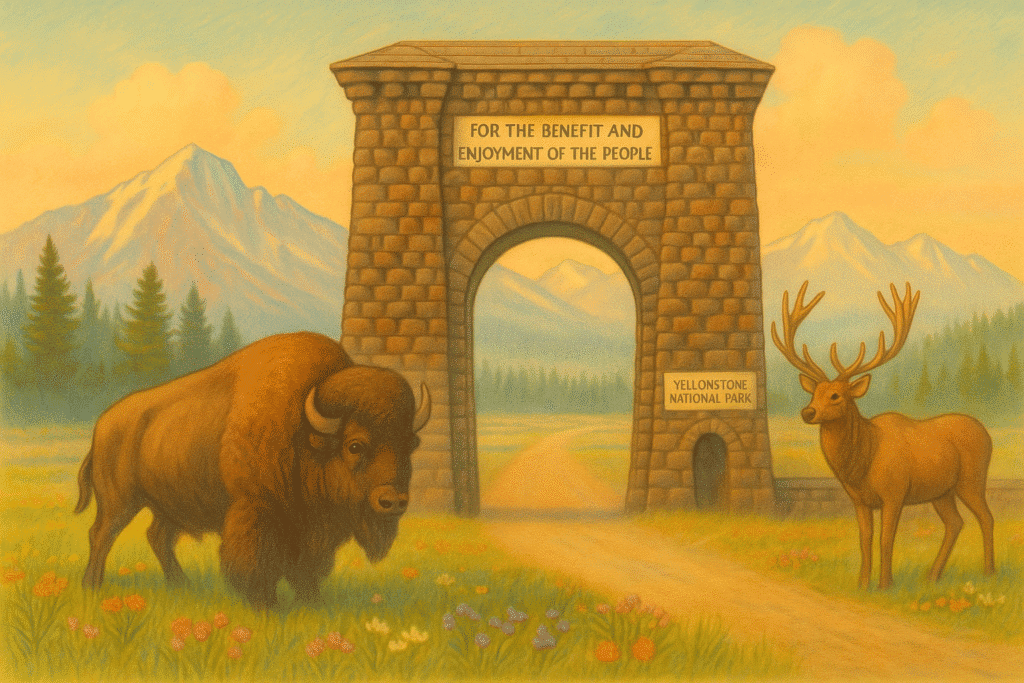
Gardiner’s a gritty little place with personality. Good food, funky shops, and one of my favorite historic sites: The Roosevelt Arch.
Built in 1903 with Theodore Roosevelt himself laying the cornerstone, the arch reads:
“For the Benefit and Enjoyment of the People.”
That’s how I see Yellowstone. Sacred. Public. Protected.
Every time we pass through the arch, we do it with a little reverence. Kind of like walking into a cathedral.
What are we doing today?
We’re getting in the car at 4:30AM—to be in the Lamar Valley at sunrise. If we time it right, we might catch the wolves howling in the dark.
Wolf chasing is always hit or miss. But if you don’t swing, you’ll never hit the ball. And lately? We’ve been striking out.
Last winter was unforgettable—we had one of those perfect Yellowstone days. This fall has been quieter so far.
But I’ve got a feeling about today. Something’s different. Let’s see what happens.
Here’s a tale from last winter – a day that we actually did see the wolves:
👉 Winter, Wildlife, Buffalo Jams, and a Near Miss in Yellowstone.
FAQ’s: Visiting Yellowstone National Park
What is the best entrance to Yellowstone from Bozeman?
The North Entrance through Gardiner is the fastest and least crowded option from Bozeman. It’s also open year-round and offers direct access to wildlife-rich Lamar Valley.
What time should I arrive in Lamar Valley to see wolves?
The best chance to hear or see wolves is just before sunrise, typically around 4:30–6:00AM depending on the season. Early arrival is key—wolves are most active at dawn.
Are there ways to avoid crowds in Yellowstone?
Yes. Use the North, Northeast and East entrances, travel in the shoulder seasons (late fall or early spring), and visit popular areas like Old Faithful early in the day.
Note: From approximately October 31 to May 15, most interior park roads are closed to vehicles—including the road to Old Faithful—so access is limited to snow coach tours or guided trips during that time.
Can I visit Yellowstone in the winter?
Yes, but access is limited. The North and Northeast Entrance (you can only get in from the North) are the only entrances open to vehicles year-round, and much of the park becomes accessible only by snow coach or guided tour.
How can I save money visiting Yellowstone?
Avoid peak summer travel, stay in nearby towns like Livingston, Emigrant or Gardiner instead of the more popular gateway hubs, and pack your own food to skip overpriced park concessions.
Is wolf watching guaranteed in Yellowstone?
No wildlife sightings are guaranteed, but Lamar Valley offers your best odds. Bring binoculars, rent or buy a spotting scope, be patient, and go early. Local guides can also increase your chances.