If you inherit an IRA from a spouse, you generally have the option of rolling it into your own IRA. That means the tax rules stay the same, and you don’t have to take required minimum distributions (RMDs) until age 73.
If you inherit an IRA from a non-spouse, it must be treated as an inherited IRA. This comes with different rules. In most cases, non-spouse beneficiaries must follow the 10-year rule: the account must be fully distributed within 10 years after the original owner’s death.
There are a few exceptions for “eligible designated beneficiaries” (such as minor children or disabled beneficiaries), but most people reading this will fall under the 10-year rule.
The Problem With Waiting Until Year 10
A lot of people think: Great, I’ll just let it grow for 10 years and then withdraw it all at once. But there are two problems with this approach:
Taxes could skyrocket.
U.S. tax brackets are progressive—the more income you have in a year, the higher the tax rate on the top portion. Taking a large lump sum in Year 10 could push you into a much higher tax bracket, wiping out much of the tax advantage you thought you were getting.You miss contribution opportunities.
Each year you’re allowed to contribute a limited amount to your own retirement accounts. Once a year passes, that window closes. For 2025, someone over 50 can contribute up to $8,000 to a Roth IRA ($7,000 regular + $1,000 catch-up). If you wait 10 years, you lose the chance to systematically build tax-free Roth assets along the way.
A Smarter Strategy: Annual Withdrawals + Roth Conversions
Let’s walk through a common strategy I recommend for higher-income couples.
Scenario: A wife inherits a $200,000 IRA. She and her husband each earn good income (around $300,000 combined). Here’s the plan:
- Open two traditional contributory IRAs (one for each spouse).
- Open two Roth IRAs (one for each spouse).
- If they don’t already have one, open an individual or joint brokerage account.
- Each year, withdraw enough from the inherited IRA to cover the couple’s maximum IRA contributions plus the taxes owed.
Because withdrawals from an inherited IRA are taxed as ordinary income (but not penalized, even before age 59½), you can plan this carefully.
For example, in 2025, the couple can contribute $16,000 total ($8,000 each) to Roth IRAs. To net that $16,000 after federal and state taxes (say, 24% federal and 7.15% state in Maine), you’d need to withdraw about $23,239 from the inherited IRA.
That withdrawal is then allocated as follows:
- $8,000 → her Roth IRA
- $8,000 → his Roth IRA
- ~$5,577 → IRS withholding
- ~$1,662 → Maine withholding
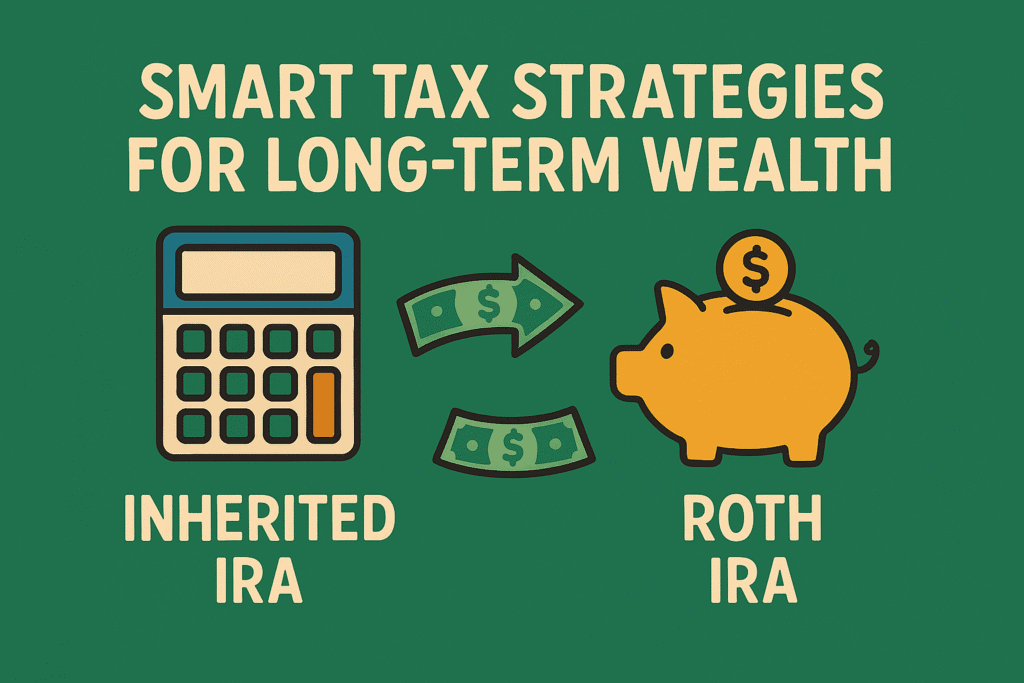
Over time, this turns the inherited IRA into a stream of annual Roth contributions.
But What If You’re Over the Roth Income Limit?
High earners are often barred from contributing directly to Roth IRAs. Enter the Backdoor Roth IRA strategy.
Here’s how it works:
- Make a non-deductible contribution to the traditional IRA.
- Immediately convert that contribution to a Roth IRA.
- Since you already prepaid the taxes from the inherited IRA withdrawal, the Roth conversion is essentially “tax-free” meaning it doesn’t subtract from your current earned income. The inherited IRA is paying the taxes for you.
Your brokerage firm will report this on Form 1099-R, and your tax preparer (or software like TurboTax) will walk you through it.
Why This Works
This approach spreads withdrawals over several years, avoiding a massive tax hit in Year 10. It also systematically builds Roth assets, which in my opinion are the most valuable kind of retirement dollars:
- They grow tax-deferred.
- They come out tax-free.
- They don’t push you into a higher tax bracket when you use them.
By contrast, traditional IRA withdrawals are fully taxable and brokerage accounts generate ongoing tax bills from dividends, interest, and capital gains. Both can push you into higher tax brackets where Roth withdrawals do not (at least under current tax code).
Final Thoughts
This isn’t the right strategy for everyone, but for many people it can be a smart way to stretch the value of an inherited IRA. Instead of simply cashing out or waiting until the 10th year, you can turn an inheritance into a long-term, tax-efficient wealth builder and perhaps a legacy asset for your heirs.
This is how generational wealth is built. With consistent savings, smart investing, long-term planning and tax-efficient strategies like this one.